
Vantaris
See which supplier delays could put stock at risk.
Vantaris by Tecblitz is supply chain intelligence, built on Intelligent Operations Software. Start with one stock or supplier workflow. Bring the agreed records into view, see why an issue needs attention and give the right person the follow-up.
In development. First clients start with Replay.
A one-time build configures Vantaris to your locations, suppliers and stock records. A monthly subscription covers hosting, updates and support. A first paid stage is agreed in writing.
Illustrative · Sample data
A supplier date moves. A gap appears. Someone follows up.
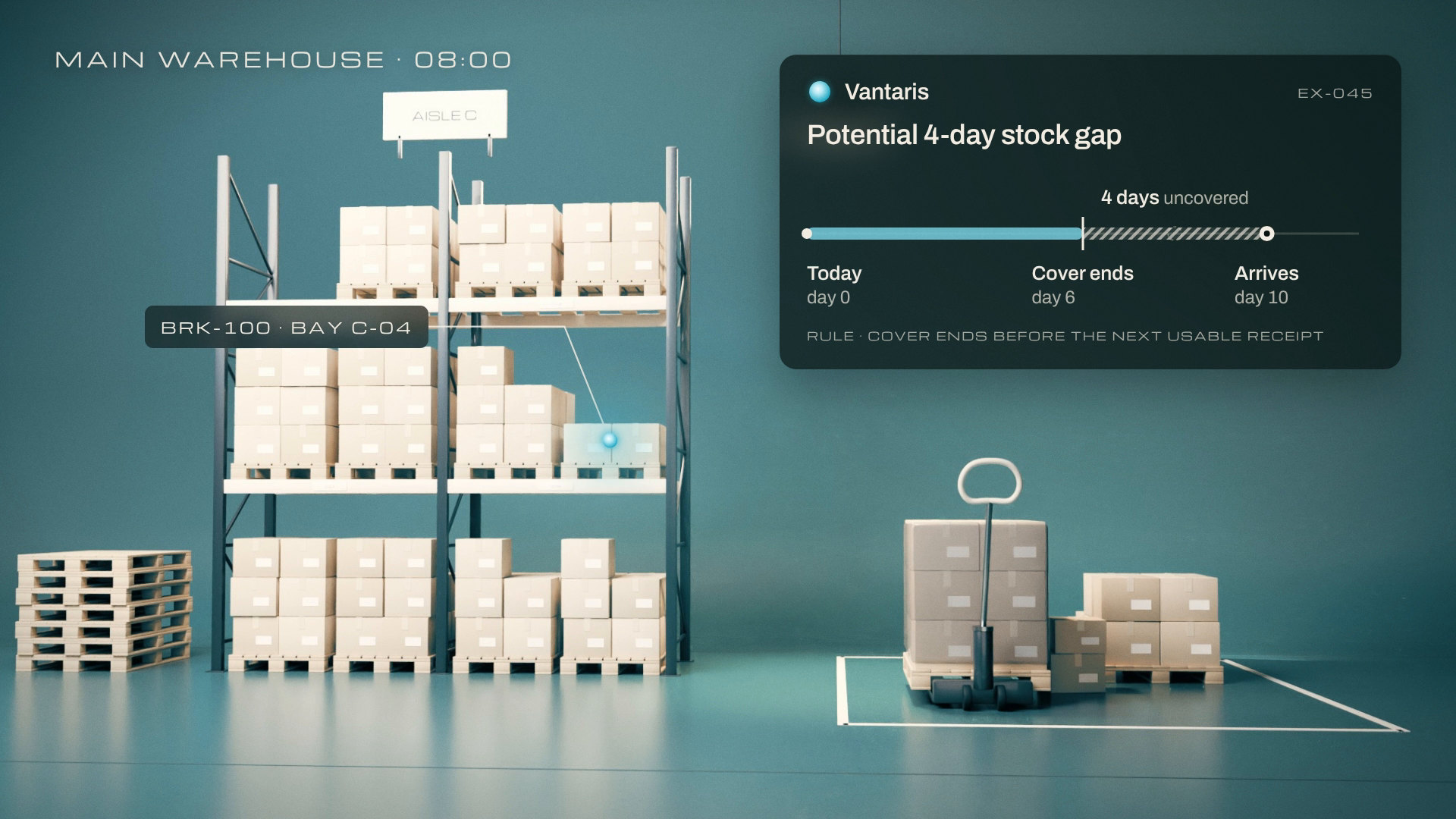
A supplier moves an order from day 8 to day 10. The walkthrough shows a possible four-day stock gap, the records behind it and the follow-up assigned to Procurement.
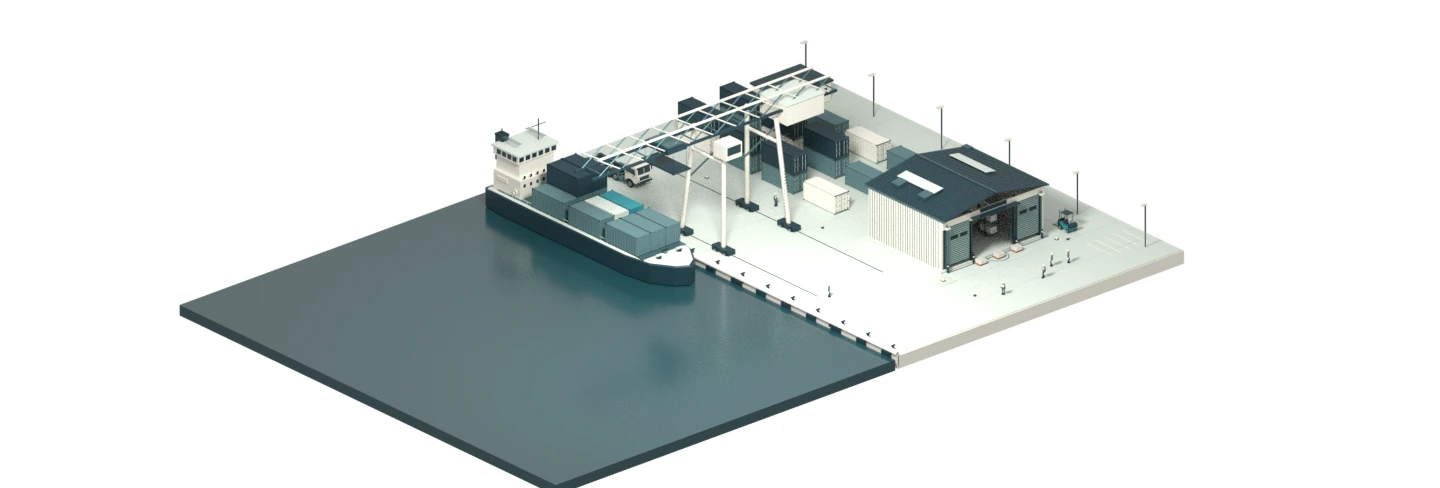
The promise
One order. A promised date.
Order A needs to arrive by day 8.
The change
One delay. A wider impact.
Arrival moves from day 8 to day 10.
The exposure
See the gap. Before it grows.
Stock runs out before the next supply is due. Current stock cover is 6 days. The next usable supply is day 10. The potential gap is 4 days.
The investigation
Connect the facts. Choose the next move.
Stock, orders and the revised date become one investigation. Usable stock is 120 units. Demand is 20 units a day. The next usable supply is day 10.
The decision
A decision. With an owner.
A person reviews the evidence and assigns the follow-up. The follow-up is to confirm the revised date. The owner is Procurement.
The evidence
Then, verify what arrived.
Later, the receipt is matched to the shipment and reviewed.
The scene plays when it can. These chapters are the same story.
One order.
A promised date.
Order A needs to arrive by day 8.
Film
Vantaris, in motion.
Scenes from the stock-risk workflow.
How a first workflow is shaped
Evidence, an owner, and the records you already have.
See the evidence.
Review where a figure came from and when it was updated.
Keep people accountable.
Give each issue an owner and agree who approves important actions.
Start with what you use.
Assess available exports and agree which records, access and handover are needed for the first workflow.
Replay
Replay on your own history.
Before the full build, we run the agreed rules on your past records and show which supplier delays and stock gaps they would have caught. It is the first paid stage.
- Decision
- Which supplier delay or stock gap should the rules be tested against?
- Records
- Your own past stock, purchase orders and expected dates.
- What Replay shows
- Which of those delays and gaps the agreed rules would have caught, and which they missed.
- What follows
- The build and the subscription, agreed in writing after Replay.
For the first conversation, bring the name of one recurring issue and the names of the systems or reports involved. Data access is discussed after the scope and the permissions are agreed.
Questions buyers ask
Export, people and measurement.
Can we start from an export?
Yes. The first workflow can start from exports you already produce. A direct connection to another system is assessed after the records, the access and the handover are agreed.
Who needs to be involved?
The person who owns the decision, and the people who can provide the records. The engagement names who reviews the exceptions and who receives the follow-up.
How would we measure the first stage?
Agree a baseline before the paid stage. Two examples to discuss are the median time from a supplier update to an assigned follow-up, and the share of in-scope exceptions that have an owner and a current status. Use a comparable earlier period, and record the sample size and the known gaps. If there is no usable baseline, the first stage records what was checked and sets the baseline for the next stage.
What does the first paid stage include?
Replay: we run the agreed rules on your own records and report what they would have caught and missed. The build and the subscription are agreed in writing after that.
The fuller process is on How we work. Notes on access, existing systems, evaluation, handover and who approves important decisions are on the Company page.
Discuss your supply chain.
Tell us the supply chain question. If the workflow is a fit, we'll reply with the next step.